
Fifty years on, the promise written into PNG’s Constitution is still unfinished
As Papua New Guinea moves further into its second half-century, the five National Goals its own citizens wrote into the Constitution deserve to be read as live policy, not legal furniture.
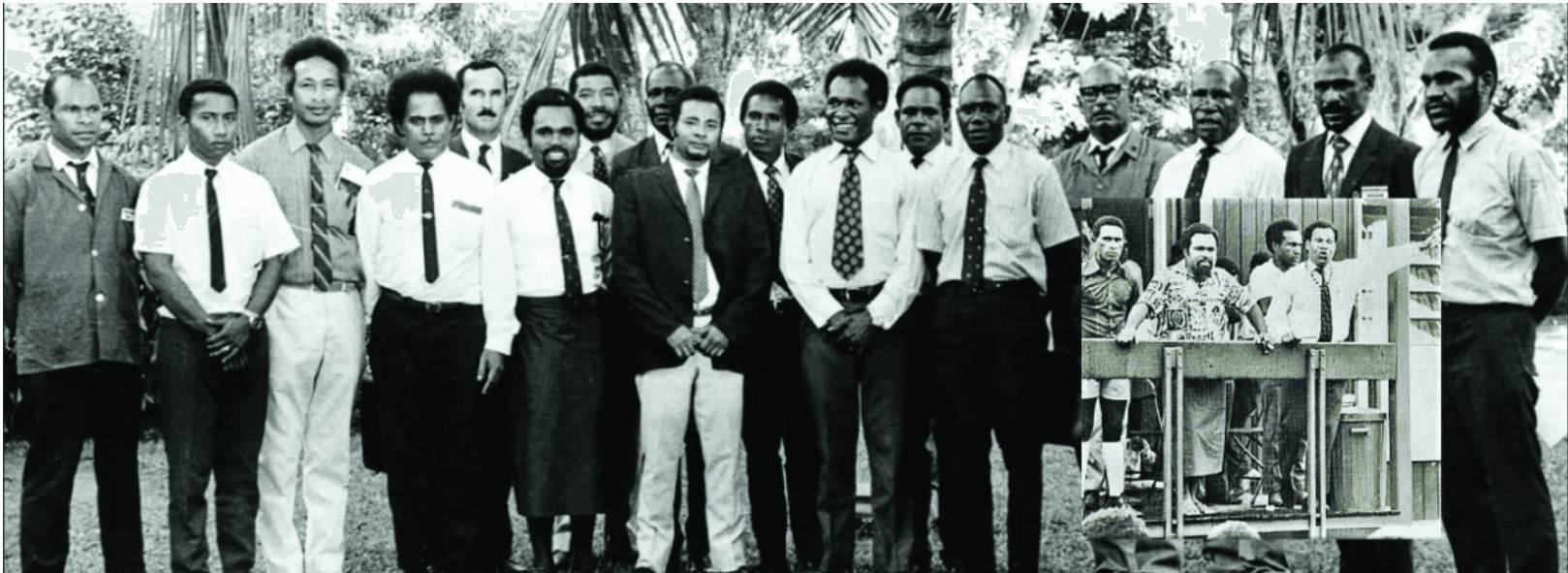
In more than a hundred village council houses and church halls across Papua New Guinea, in the two years before independence in 1975, a Committee of mostly Papua New Guinean parliamentarians sat and listened. They were not there to explain a Constitution already written elsewhere. They were asking a question almost no newly independent state had put so directly to its own citizens: what kind of country do you actually want?
The answer became Chapter 2 of the Constitution: five National Goals and Directive Principles, sitting ahead of almost everything else in the nation’s founding law. Integral human development. Equality and participation. National sovereignty and self-reliance. Wise use of natural resources. And development through Papua New Guinean, not imported, social and political forms. Every law, every court judgment on an ambiguous point, every provincial budget is, in principle, meant to be tested against them.
Fifty years after independence, this remains one of the more interesting and least discussed documents in the Pacific, not because it is obscure, but because so few Papua New Guineans, and even fewer outside the country, have read it as anything other than legal furniture. That is a missed opportunity, because the Five Goals are not really a historical curiosity. They are a live description of the trade-offs Papua New Guinea is still negotiating, in real time, with its own citizens and with the outside world.
Take the third Goal, sovereignty and self-reliance. When the Constitutional Planning Committee wrote it in 1974, close to two-thirds of the country’s modern economy sat in foreign hands, and the framers worried openly that political independence could arrive on schedule while economic control quietly stayed offshore. That worry reads less like history and more like a briefing note for 2026. PNG now sits at the centre of intensifying interest from Australia, the United States and China alike, a defence treaty with Canberra, resource and infrastructure courtship from Beijing, and a steady stream of foreign investors negotiating access to gas, gold, copper and forests. The question the framers asked of Australian capital in 1974 who actually holds the decision-making power once the agreement is signed, is being asked today of a wider and more strategically loaded set of partners. A constitution written to guard against one kind of dependency is now the yardstick for judging several.
The record against that yardstick is genuinely mixed, which is itself worth saying plainly rather than as either indictment or reassurance. Customary land remains overwhelmingly in Papua New Guinean hands, a rarity worth preserving, but resource projects still repeatedly test whether the communities who hold that land see a fair share of what is extracted from under it. Provincial government exists as the framers intended, but capacity and funding across the provinces remain uneven. Women’s representation in Parliament has improved from a very low base while still falling well short of what the equality Goal demands; a bill to create reserved seats for women has stalled for over a decade. None of this is unusual for a fifty-year-old nation measured against its founding ideals, most fare no better but it does mean the Goals are still doing real work as a diagnostic, if anyone bothers to apply them.
That is the underused part. The Goals themselves cannot be enforced through the courts on their own, the Constitution makes them formally non-justiciable, and the courts confirmed as much, at trial and again on appeal, when landowners invoked the environment Goal in an unsuccessful bid to block the Ramu Nickel mine’s tailings pipeline. But Papua New Guinea did pair the Goals with an institution built to give them some teeth: the Ombudsman Commission, which can investigate maladministration, enforce the Leadership Code against officeholders, and refer constitutional questions to the Supreme Court in its own right. It is a modest, underpublicised mechanism, and one that depends entirely on citizens knowing the Goals exist well enough to invoke them.
As PNG enters its second half-century, and as its strategic weight in the Pacific grows more contested rather than less, reviving fluency in this founding document is not a nostalgic civics exercise. It is a way of keeping a fast-changing set of external relationships honest against a standard Papua New Guineans set for themselves, in their own words, before anyone else had much stake in the answer. The Constitutional Planning Committee put the responsibility bluntly in its own final report: no constitution can supply the political will to keep a promise, only the people and their leaders can do that. Fifty years on, that line is still addressed to whoever is reading it.
Originally published https://aunamelo.wordpress.com/2026/09/14/fifty-years-on-the-promise-written-into-pngs-constitution-is-still-unfinished/