
Toxicity risks of seabed mining
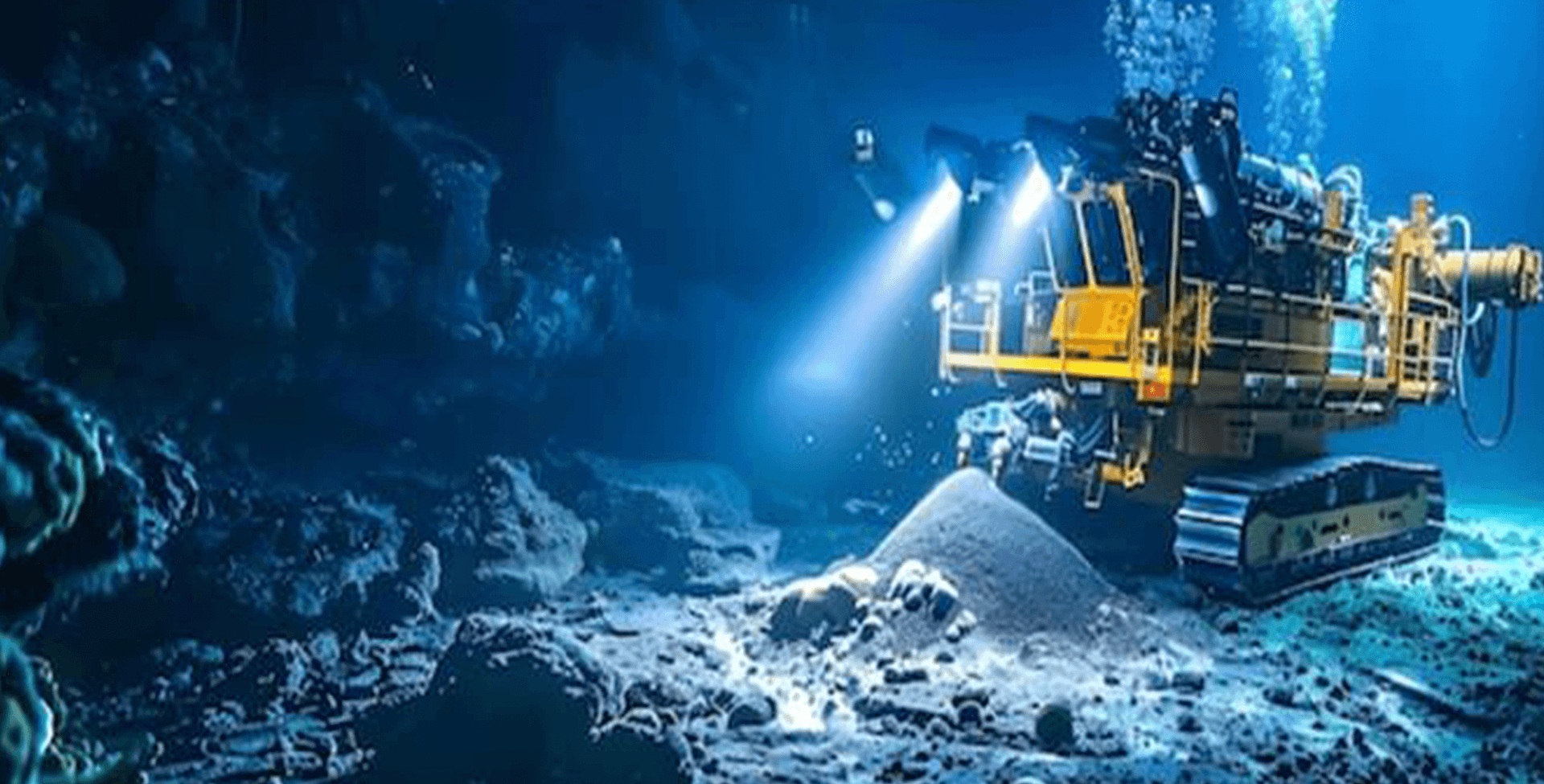
DEEP sea mining in search of precious metals at great depths of oceans of the globe is a highly risky activity due to a space in time that has not been fully understood by science.
The life at the great depths of the oceans remains largely unexplored by scientists who now slowly come to understand what life is like in the underworld of the marine kingdom. But one thing is for certain and that is the world is going head over heels to conquer it to get the highly-priced precious metals. These are not just precious metals; they are of high grade and are readily available.
What they do not understand of this largely unexplored underworld is the extremely high risk of its toxic nature to marine biological lifeforms. Science has not yet fully provided knowledge on the behaviour of these metals and the wastes that will be generated from the deep-sea mining activities.
The mining activities will generate radioactively charged wastes that will be released into the depths of the oceans as there are no regulated measures available for their safe disposal.
Scientific research and studies revealed that radioactive alpha emitters are formed and concentrated in polymetallic nodules and sea floor massive sulphide deposits. These are of high-grade value on the market and that is the reason for mining companies to target them.
The background levels of radiative material in the marine ecosystem exists at acceptable levels, however, when mobilised due to mining activities the radioactivity toxicity levels are elevated at higher concentrations and they become more destructive and may affect large areas of marine ecosystems. These radioactively charged material becomes available to food the chain thereby having an extensive destructive effect that will ultimately affect human survival due to consumption of radioactively contaminated sea foods.
World trade in harvesting and processing of seafoods like the tuna industry will be devastated and countries will restrict importation and consumption of processed seafood due to radioactive contamination. This will lead to loss of markets and income for countries.
Dangers of radioactive toxic material
Science indicates that alpha radiation is restricted by barriers such as skin and paper but is extremely destructive if swallowed or inhaled. The marine life forms will be exposed to consumption and inhaling of radioactive isotopes from the contaminated seawater. This will lead to their extinction and will affect the entire food chain.
The expansion of deep-sea mining in 2025 has raised serious concerns about habitat destruction, biodiversity loss, and disruptions to oceanic carbon storage.
Many nations and corporations of the world view deep oceans as an untapped resource capable of supplying essential materials needed for renewable energy expansion. Economic motivations driving deep-sea mining unavoidably would create serious environmental consequences, and that warrants an urgent need for stronger ocean protection policies and action.
Deep sea impacts
The deep ocean constitutes highly fragile and delicate ecosystems that remain currently unexplored and least understood by scientists.
Earth’s ocean depths are the last remaining ecosystems on the planet that remain largely untouched by industrial operations. Unfortunately, development needs of modern societies with increases in development of new technologies has resulted in a push for deep-sea mining gaining rapid traction, threatening to disrupt these fragile and unexplored environments.
Exploration and development of deep seabed mining for metals and minerals such as cobalt, lithium, and nickel would have a destructive impact on deep-sea ecosystems and biodiversity. This could have disastrous effects on fisheries, livelihoods, and food security.
It will compromise ocean carbon storage and disrupt nutrient cycles. The process of deep seabed mining includes significant disturbance of the seabed, reducing light availability and generating noise pollution, the creation of plumes, and negative impacts on the water column at the surface.
Currently, these minerals are primarily sourced from terrestrial mines, often in regions where mining operations result in significant environmental degradation, deforestation, water pollution and social conflicts.
The push for deep-sea mining arises from concerns about supply limitations and geopolitical control over these land-based resources. These minerals are essential for modern technologies, including electric vehicle batteries, wind turbines, and other renewable energy infrastructure.
However, while these resources fuel the transition to clean energy, mining them from the seabed poses irreversible risks to marine ecosystems.
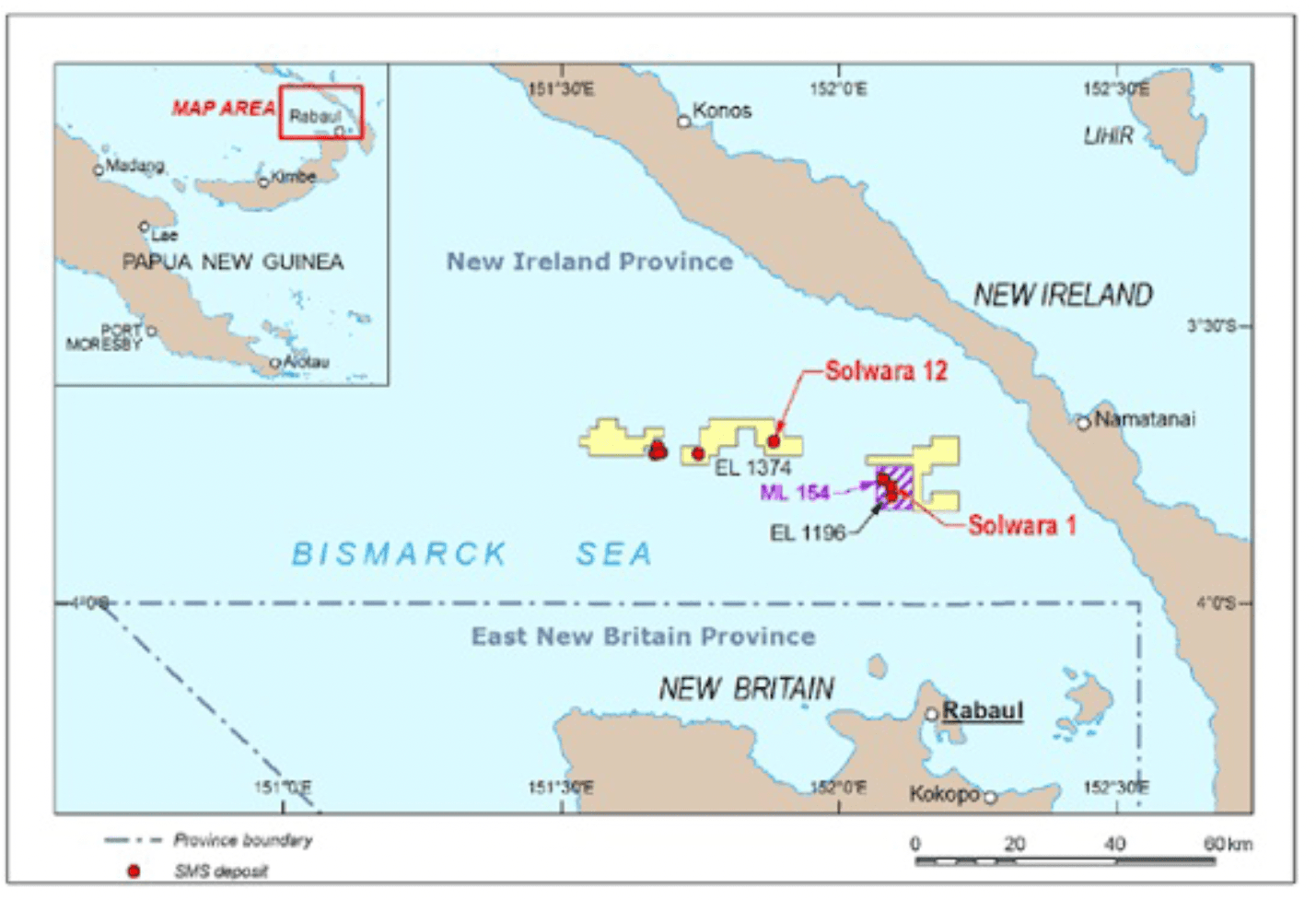
Location of abandoned Solwara 1 project in New Ireland waters
Radiation toxicity
In a recent new report released, Dr Helen Rosenbaum and a group of scientists reveal for the first time that seabed mining could cause the poisoning of our seas by releasing radioactive particles.
The radioactive particles include some of the most toxic known to human called alpha particles and the radiation they emit are extremely dangerous when consumed and inhaled inside by humans and marine wildlife.
Alpha particles exist everywhere on land, in rocks, soil and plants. And under the sea they are also bound up in rocks.
Under natural conditions they are safely locked away. But when disturbed they are released into the environment.
If we breathe them in or swallow them, they can damage our cells, proteins and DNA. This is why people can get sick and die from radiation poisoning.
Seabed mining will be very destructive. It will destroy special ecosystems and marine life and it will release radioactive particles into the water. Science also tells us that at the same time seabed mining will release heavy metals.
Marine life will be surrounded by water contaminated by both radioactive alpha particles and heavy metals. Marine life will swallow and breathe them in and eat prey also contaminated by these toxic elements.
And that is one of the big worries. Both heavy metals and alpha particles can accumulate in the bodies of marine organisms and transfer up the food chain – with small fish being eaten by bigger fish – until they end up on our own plates.
Legal and international standards
There is a pressing need to develop policies, legislation, standards both at the domestic and international levels to protect these fragile and delicate deep seabed ecosystems. One such legal instrument is the The International Seabed Authority (ISA). The authority is an independent global agency that regulates deep-sea mining activities and sets industry standards.
Additionally, international oceans protection is provided by a range of laws, treaties, and protocols with the aims of preventing pollution, protecting biodiversity and ensuring sustainable use of marine resources. The main instruments include the United Nations Convention on the Law of the Seas (UNCLOS), the International Convention for the Prevention of Pollution from Ships (MARPOL) and the United Nations Convention on Biological Diversity (CBD).
Scientific research
A lot of research is required to fully understand the ecological risks and effects from radioactive isotopes contamination from deep sea mining of polymetallic nodules and seafloor sulphite deposits and the extend and intensity of impacts on marine species, the marine ecosystem and the food web.
There are no existence of researched studies and publication of journals regarding deep sea mining and its toxic nature on marine ecosystem.
Currently, there is no information available on exposure levels, doses and its effects on from radioactive isotope contamination.
Regulations
Regulatory standards should be established as a minimum to provide the safety net as a precautionary measure despite not enough research to provide specific standards. Most countries lack very basic environmental regulatory frameworks, specially in Pacific Island countries where most deep sea mining will occur.
Papua New Guinea is the only country that has a comprehensive environmental regulatory framework – the Environment Act 2000 – under which the mining industry is subjected to an environmental assessment process and issuing of environmental permits for the discharge of mining waste as a minimum standard. The permits are conditional with allowable limits or standards for discharges.
Therein are also international instruments such as treaties and conventions that provide some level of control on what should be regulated, and management strategies. The Law of the Sea (UNCLOS) is an example of such conventions.
Collaborative networks should be encouraged with other organisations in the region who are also addressing issues relating to deep sea mining.
The “National Oceanographic and Atmospheric Administration (NOAA)” also have a responsibility in taking necessary steps to facilitate and expedite the permitting process for deep sea mining. The International Seabed Authority (ISA) is also responsible for protecting the international deep sea and therefore issues mining permits. The International Atomic Energy Agency, although not directly related to deep sea mining, has regulatory standards for the use and discharge of radioactive nuclear wastes.
Experiences and studies should also look into industries that are involved in the use and discharges of radioactive material such as deep sea mining waste. The waste generated from deep sea mining will be rendered with heavy metals as well as radioactive isotopes. This is a more complex issue and specific studies are required to provide information on their behaviour and reaction in the marine environment.
The waste released has protentional to magnify and bioaccumulate as these become more toxic and taken up through the food web to the higher consumers.
Papua New Guinea experience – PNG Solwara 1 Project
Solwara 1 was destined to be the first deep sea mining (DSM) project to be developed in New Ireland Province by Nautilus Mining company of Canada.
The Pacific is a region of immense deep-sea mining potential. In 2008 Nautilus Minerals provided its environmental impact assessment (EIA) to the Papua New Guinea Government to start deep sea mining in the Bismarck Sea.
Nautilus hoped to become the world’s first deep-sea mining firm. Since 1997, Nautilus has been exploring PNG waters and in 2016 it conducted explorer drilling in the Bismarck Sea.
PNG Governments failure
The Government failed to consider scientific information on what constituted the deep-sea floor and there was no scientific information available for the evaluation of its impacts. Recent research efforts revel that there are serious threats involved in mining minerals at the deep-sea floor and the risks are very real and more research is required.
The Bismarck Sea is home to hundreds of thousands of people whose lives have been dependent on the sea for thousands of years. The deep sea-mining project Solwara 1 was planned to mine sea-floor massive sulfides, the rich hydrothermal vents formed by plumes of hot, acidic, mineral-rich water on the floor of the Bismarck Sea.
Solwara 1 was awarded part of the mining lease which includes an area of 59 km2, 30 km off the coast at a depth of 1,600 m. The project was projected to have a lifespan of 25 years and would focus on the extraction of copper, gold, silver and zinc.
Solwara 1 project failed to provide information on its obligation on free, prior and informed consent. The most important point to note was the scientific argument based on the precautionary principle, which says that deep-sea mining should be prohibited until there is a greater knowledge of its possible environmental impacts. The second one was the principle of free, prior and informed consent, as embodied in the United Nations Declaration on the Rights of Indigenous Peoples (UNDRIP).
The environmental impact statement (EIS) had many irregularities including the underestimation of ‘dewatering’: a process where rocks ground into gravel on the sea floor are pumped together with water up to a ship on the surface; after that rocks are filtered out of the water.
The generated dewatered effluent will create large plumes of murky water that could cover all life on the sea-floor in a layer of mud.
Furthermore, it did not model what metals might expect to be in those plumes that are going to be generated and the potential human poisoning. Many other anomalies included earthquake risks, machine noise and interference in animal communication, light pollution and impacts on indigenous cultural way to fish based on shark calling.
Many gaps existed in the EIS and the many risks have not been properly assessed. Subsequent conversations with Nautilus resulted in reassurances that research has since been conducted that would address these concerns.
However, no such information has been provided as there is no information available as no in-depth research as been conducted into the depths of the sea floor.
Despite the advocacy campaigns, everything was to be ready for mining to start in 2018. The company launched a lengthy legal battle with the PNG Government about payment of shares, which delayed the whole venture. A key corporate investor pulled out and this also brought Nautilus teetering on bankruptcy.
In 2019 the experiment eventually failed and Nautilus had gone into administration. In February 2019, Nautilus finally filed for court protection from creditors under the Canadian Companies’ Creditors Arrangement Act.
But for the people of Papua New Guinea, this was not a victory. In 2019 PNG citizens called for a full ban on sea-bed mining.
Because of the growing pressure from deep-sea mining companies (French, Canadian, US, and Chinese), in 2019, Fiji Prime Minister (Frank Bainimarama) and Vanuatu Prime Minister proposed a 10-year moratorium on sea-bed mining to allow proper scientific research on exclusive economic zones (EEZ) and territorial waters. In September 2019, Papua New Guinea joined Fiji and Vanuatu.
But deep-sea mining has not yet happened anywhere in the world, and scientists, human rights groups and indigenous communities highlight the lack of evidence demonstrating its safety.
Originally published by The National https://www.thenational.com.pg/toxicity-risks-of-seabed-mining/